Why Balance Training Just Changed My Daily Routine — For Real
You’ve probably heard balance training helps prevent falls or boosts athletic performance, but what if it could quietly transform your everyday life? I started simple—standing on one leg while brushing my teeth—and noticed real shifts: better posture, sharper focus, even more confidence walking downstairs. It’s not flashy, but the consistency? Life-changing. This isn’t about extreme workouts. It’s about small, repeatable moves that quietly strengthen your body and mind—every single day. What began as a curiosity became a cornerstone of daily wellness, supported by science and accessible to nearly everyone, regardless of age or fitness level. Balance training is not just a physical exercise—it’s a lifestyle upgrade disguised as a five-second habit.
The Overlooked Power of Balance
Beyond the familiar image of older adults doing seated leg lifts or athletes on wobble boards, balance training holds a quiet, underestimated power. It is not a niche fitness trend or a corrective measure reserved for injury recovery. Instead, it is a foundational skill that influences how we move, carry ourselves, and interact with our environment from morning to night. At its core, balance is the body’s ability to maintain control of posture and motion—whether standing still, turning, or navigating a crowded room. This control relies on constant communication between the brain and sensory systems, making it both a physical and neurological act.
Everyday activities expose how much we depend on balance, even when we don’t realize it. Carrying a laundry basket up the stairs, stepping off a curb, or reaching for a high shelf all require subtle adjustments in weight distribution and coordination. A momentary lapse—like catching a toe on a rug or misjudging the height of a step—can lead to a stumble or fall, especially as we age. According to the Centers for Disease Control and Prevention, one in four adults over 65 experiences a fall each year, often with serious consequences. Yet, many people assume balance is something you either have or you don’t, overlooking the fact that it can be improved at any age through consistent practice.
Common misconceptions contribute to the neglect of balance training. Some believe it’s only for seniors or elite athletes. Others assume it requires special equipment or long sessions. In reality, balance exercises can be done anywhere, anytime, with no gear. The barrier is often not time or ability, but awareness. Because the benefits are subtle and build gradually, people may dismiss the practice as too simple to matter. Yet, like saving small amounts of money over time, the cumulative effect of daily balance training creates lasting improvements in stability, coordination, and confidence.
Why Routine Regularity Beats Intensity
One of the most compelling aspects of balance training is that it thrives on consistency, not intensity. Unlike high-effort workouts that demand energy and recovery, balance exercises benefit from frequent, short repetitions. This is due to how the brain learns and maintains motor skills. Neurological research shows that the nervous system strengthens movement patterns through repetition. Short daily practice—such as standing on one foot for 30 seconds twice a day—activates neural pathways responsible for coordination and spatial awareness more effectively than occasional longer sessions.
Think of balance like dental hygiene: brushing your teeth doesn’t require great effort, but skipping it leads to long-term problems. Similarly, neglecting balance weakens the body’s ability to respond to unexpected shifts in terrain or motion. By integrating micro-sessions into daily routines, you create a sustainable habit that supports lifelong mobility. The key is not duration, but regularity. Two minutes a day, spread across routine moments, can yield measurable improvements in stability within weeks.
Habit stacking—linking a new behavior to an existing one—proves especially effective for balance training. For example, you might practice standing on one leg while waiting for the kettle to boil, during a phone call, or while brushing your teeth. These moments require no extra time and reduce the mental resistance to starting. Over time, the brain begins to associate these daily cues with the practice, making it automatic. This approach aligns with behavioral science, which emphasizes environmental triggers and consistency over motivation, which tends to fluctuate.
Moreover, low-intensity practices are more sustainable than demanding routines that rely on willpower. Many people abandon fitness goals because they start too aggressively. Balance training, by contrast, meets people where they are. It can be adapted for any fitness level and adjusted as skills improve. The focus is not on pushing limits, but on building a reliable foundation. This gentle, repeatable nature makes it ideal for long-term integration into a busy life, especially for those managing household responsibilities, work, or caregiving roles.
What Actually Happens in Your Body
Balanced movement is not just about strong legs or good posture—it’s a complex coordination of three primary systems: the vestibular system in the inner ear, the visual system, and proprioception. The vestibular system detects motion and head position, helping you stay oriented in space. The visual system provides cues about your surroundings, such as whether the ground is level. Proprioception, often called the “sixth sense,” allows your body to sense where its parts are without looking—like knowing your foot is flat on the floor even with your eyes closed.
These systems work together seamlessly in daily life, but they require stimulation to stay sharp. Modern lifestyles often limit this stimulation. Long hours of sitting, reduced physical activity, and reliance on supportive footwear can dull proprioceptive feedback. Screens dominate visual input, sometimes at the expense of spatial awareness. And without movement challenges—like walking on uneven terrain or turning quickly—the vestibular system receives less practice. Over time, this sensory underuse can lead to a decline in balance, even in otherwise healthy individuals.
A useful analogy is to think of your balance as a team sport. The vestibular, visual, and proprioceptive systems are teammates. If one player—say, vision—is compromised (such as in dim light), the others must compensate. But if all three are undertrained, the entire system becomes unreliable. This is why someone might feel unsteady in the dark or on a soft surface like sand. The good news is that each system can be strengthened through practice. Closing your eyes during a balance exercise, for example, challenges the vestibular and proprioceptive systems to work harder.
Age-related decline in balance is common, but not inevitable. Research published in journals such as Frontiers in Aging Neuroscience confirms that balance training can improve stability and reduce fall risk in older adults. More importantly, these improvements are possible at any age. The nervous system retains plasticity—its ability to adapt and form new connections—throughout life. This means that whether you are 35 or 75, practicing balance exercises can enhance your body’s ability to respond to challenges, improving both safety and confidence in daily movement.
Simple Moves That Fit Any Lifestyle
The beauty of balance training lies in its simplicity. You don’t need a gym membership, special shoes, or expensive equipment. Four foundational exercises—single-leg stance, heel-to-toe walk, weight shifts, and clock reaches—can form the core of an effective routine. Each targets different aspects of stability and can be modified to match your current ability.
The single-leg stance is the most basic and versatile. Stand near a wall or chair for support, shift your weight to one foot, and lift the other slightly off the ground. Keep your spine tall, shoulders relaxed, and gaze forward. Hold for 20 to 30 seconds, then switch sides. Focus on steady breathing and maintaining alignment—avoid leaning or gripping with your toes. As you improve, try closing your eyes or standing on a folded towel to increase difficulty.
The heel-to-toe walk mimics a sobriety test but serves a real purpose: it enhances coordination and trains the body to move in a narrow base of support. Walk in a straight line, placing the heel of one foot directly in front of the toes of the other. Take 10 to 15 steps, arms out for balance if needed. This exercise is excellent for improving gait stability and is easily done in a hallway or backyard.
Weight shifts help you become aware of how your body moves over your feet. Stand with feet shoulder-width apart and slowly shift your weight to the right, lifting the left foot slightly. Return to center, then shift to the left. You can also move forward and back, rolling from heels to toes. This dynamic movement improves control and prepares the body for real-life shifts, like catching yourself when you trip.
The clock reach adds upper body motion to challenge balance further. Imagine your body is the center of a clock, with 12 at the front and 6 at the back. Stand on one leg and reach the opposite arm toward different numbers—3, 9, 12—while maintaining stability. This integrates coordination, core engagement, and focus. Start with small reaches and increase range as you gain confidence.
Begin with 30 seconds per side, twice a day. As balance improves, gradually increase duration or add progressions. The goal is not perfection but consistency. These exercises can be done in socks on a carpeted floor, during commercial breaks, or while waiting for a child to get ready for school. Their adaptability makes them ideal for fitting into a full daily schedule without disruption.
Making It Stick: The Habit Design Approach
Starting a new practice is often easier than maintaining it. The real challenge lies in making balance training a lasting habit. Behavioral psychology offers proven strategies to support consistency. One of the most effective is cue-based habit formation—linking the new behavior to an existing routine. For example, every time you brush your teeth, stand on one leg. Or, after hanging up your coat when you come home, do 10 seconds of weight shifts. These cues anchor the behavior in familiar moments, reducing the need for decision-making.
Another key element is feedback. Without visible results, it’s easy to lose motivation. Tracking progress—such as marking a calendar each day you practice—creates a visual record of commitment. Some people use habit-tracking apps or keep a simple journal noting how long they held a stance or whether they felt steadier on stairs. This self-monitoring reinforces effort and highlights subtle improvements that might otherwise go unnoticed.
Environmental design also plays a role. Placing a small mirror in a hallway or kitchen can serve as a reminder to check posture and practice balance while doing routine tasks. Families can turn it into a light challenge—seeing who can stand on one foot the longest during dinner prep. This social aspect adds enjoyment and accountability, increasing the likelihood of continuation.
Common drop-off points include boredom, impatience, and overcomplication. To avoid these, keep the routine simple and flexible. There’s no need to do all four exercises daily. Even one minute of focused practice counts. Rotate exercises to maintain interest, or set small goals—like standing without support for 45 seconds. Remember, the aim is not to master a complex routine but to build a resilient foundation through repetition. Over time, the act itself becomes rewarding as improvements in posture, confidence, and coordination become part of daily life.
Real Benefits Beyond Stability
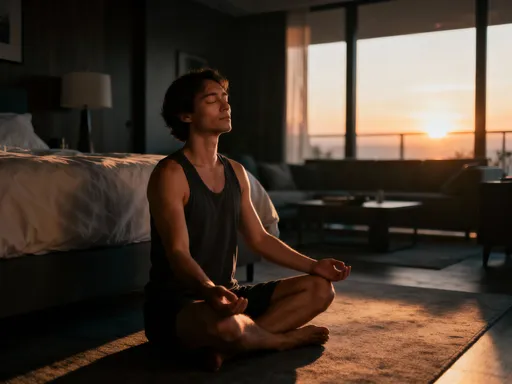
While improved stability is the most obvious benefit, balance training offers deeper, often unexpected advantages. One of the most reported is enhanced mental focus. Because balance requires attention to body position, breath, and surroundings, it acts as a form of mindful movement. This focused awareness can quiet mental chatter, similar to the calming effect of light meditation. Many people notice they feel more present and less distracted after a brief balance session.
The nervous system also benefits. Mindful movement practices have been shown to reduce activity in the sympathetic nervous system—the part responsible for stress responses. By engaging in calm, controlled exercises, the body signals safety, which can lower heart rate and promote relaxation. Over time, this contributes to reduced daily stress and improved emotional regulation, especially valuable for those managing busy households or caregiving responsibilities.
Indirect physical benefits include better sleep posture and increased body awareness. As posture improves, so does spinal alignment, which can reduce discomfort during long periods of sitting or standing. Many people report sleeping more comfortably, particularly if they incorporate gentle balance movements into their evening routine. Additionally, heightened body awareness makes it easier to notice and correct poor habits—like slouching at a desk or favoring one leg when standing.
After two to four weeks of consistent practice, users often observe real-world changes: walking more confidently on uneven ground, carrying heavy items with greater ease, or simply feeling more grounded. These shifts are not dramatic, but they accumulate. They translate into a greater sense of control and independence—qualities that support long-term well-being and quality of life.
Staying Safe and Smart
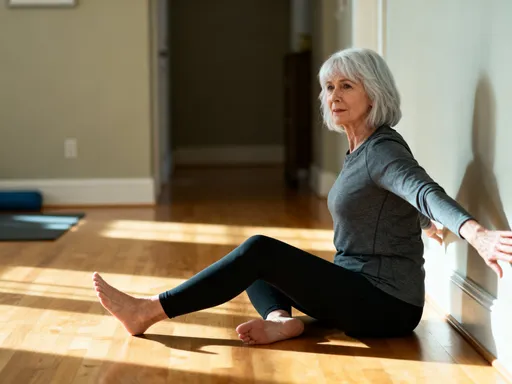
Safety is essential when beginning balance training. Always start near a stable support, such as a wall, countertop, or sturdy chair. This allows you to steady yourself if you feel unbalanced. Never practice on slippery surfaces or wear loose footwear. Bare feet or non-slip socks on a carpeted floor provide the best feedback and grip.
If you experience dizziness, pain, or persistent imbalance, stop the exercise and consult a healthcare provider. While balance training is safe for most people, certain conditions—such as inner ear disorders, neuropathy, or neurological issues—may require professional guidance. It is important to remember that balance exercises complement, but do not replace, medical treatment. They are a preventive and supportive practice, not a cure.
Patience is crucial. Progress in balance is often subtle. You may not notice changes day to day, but over weeks, the improvements become clear. Avoid comparing yourself to others or expecting rapid results. Each person’s starting point and pace are different. Celebrate small wins—like standing longer, needing less support, or feeling steadier on stairs. These milestones reflect real neurological and physical adaptation.
Finally, listen to your body. If you feel fatigued or distracted, shorten the session. Balance training should never feel stressful or forced. The goal is gentle, consistent engagement that supports lifelong mobility and confidence. By approaching it with care and regularity, you invest in a foundation that supports every step you take—today and for years to come.
Balanced movement is not about dramatic gains or viral workout trends. It’s a quiet, consistent practice that strengthens the foundation of movement—something we all rely on, every moment of the day. By integrating simple drills into daily routines, anyone can build resilience, confidence, and body awareness over time. The real win isn’t standing on one leg longer—it’s moving through life with greater ease, stability, and presence. Start small, stay regular, and let the ripple effects do the rest.