You Won’t Believe How Simple Anti-Aging Rehab Can Be
Aging is inevitable, but how we age is within our control. After years of feeling stiff, tired, and 'off,' many discover that simple, science-backed rehabilitation practices can dramatically improve mobility, energy, and overall vitality. This isn’t about quick fixes—it’s about consistent, gentle changes that rebuild strength and slow aging from within. What if the key to staying youthful wasn’t in a bottle, but in daily movement and recovery? The truth is, the body responds to care, not just time, and rehabilitation offers a powerful, accessible path to aging with resilience.
The Hidden Truth About Aging and Physical Decline
For decades, society has accepted stiffness, fatigue, and declining strength as natural consequences of growing older. Many women in their 30s to 50s begin to notice subtle changes—difficulty rising from a chair without using their hands, hesitation on stairs, or discomfort after standing too long. These signs are often dismissed as 'just part of getting older.' Yet research increasingly shows that physical decline is less about chronological age and more about lifestyle patterns, particularly inactivity. The human body is designed to move, and when movement decreases, the systems that support mobility—muscles, joints, nerves, and circulation—begin to weaken not because of age, but because of disuse.
Rehabilitation, traditionally associated with recovery after injury or surgery, is now being redefined as a proactive tool for healthy aging. It’s not reserved for those with diagnosed conditions; it’s a form of preventive care that supports the body’s ability to maintain function. Think of it as routine maintenance for a well-loved car: without regular tune-ups, even the best engine begins to sputter. Similarly, without consistent physical input, the body’s natural repair mechanisms slow down. Joints stiffen, muscles atrophy, and balance becomes less reliable. The good news is that these changes are largely reversible, even later in life, when the right kind of movement is introduced consistently.
Consider everyday scenarios: a mother lifting her young child, a grandmother carrying groceries up a flight of steps, or a professional standing through a long workday. When these once-effortless tasks become difficult, it’s often not due to a medical condition but to the gradual loss of functional strength and joint resilience. This decline doesn’t happen overnight. It accumulates silently, one inactive day at a time. But because it progresses slowly, it’s easy to adapt—by moving less, avoiding stairs, or relying on chairs. Over time, this creates a cycle: less movement leads to weaker muscles, which leads to even less movement. Breaking this cycle requires awareness and a shift in mindset—from seeing movement as optional to viewing it as essential.
Why Rehabilitation Is the Missing Piece in Anti-Aging
Most anti-aging strategies focus on external solutions: skincare, supplements, or cosmetic procedures. While these may offer temporary improvements in appearance, they don’t address the internal systems that truly define how we feel and function. Rehabilitation, on the other hand, works from the inside out. It strengthens connective tissues like tendons and ligaments, improves blood flow to muscles and organs, and enhances joint lubrication and stability. These changes aren’t just about comfort—they influence cellular health. Studies have shown that regular physical activity, including rehabilitative movement, supports mitochondrial function, reduces chronic inflammation, and may even play a role in maintaining telomere length, the protective caps on chromosomes associated with cellular aging.
One of the most powerful aspects of rehabilitation is its ability to improve physical resilience. When the body is conditioned through gentle, targeted exercises, it becomes better equipped to handle daily stressors—whether it’s bending to tie a shoe, reaching for a high shelf, or recovering from a minor stumble. This resilience translates into greater independence, especially as we age. Unlike high-intensity workouts that may feel intimidating or unsustainable, rehabilitation focuses on quality of movement over quantity. It emphasizes control, alignment, and awareness, which are critical for preventing falls and injuries—two of the leading causes of loss of independence in older adults.
Another key benefit is improved neuromuscular communication. As we age, the signals between the brain and muscles can weaken, leading to slower reaction times and reduced coordination. Rehabilitation exercises help retrain these pathways, essentially 'rebooting' the body’s movement software. This is why many people who begin a rehab routine notice not only physical improvements but also sharper mental focus and greater body awareness. The mind-body connection strengthens, making daily activities feel more fluid and confident. This holistic effect—where physical care supports mental clarity—is one of the most underrated benefits of consistent rehab work.
The Three Core Pillars of Anti-Aging Rehab (Simple & Doable)
Effective anti-aging rehabilitation rests on three foundational pillars: mobility training, low-impact strength work, and neuromuscular re-education. Each plays a distinct role in preserving function and slowing decline, and all can be practiced safely at home with no special equipment. The beauty of these pillars is their simplicity. They don’t require hours at the gym or expensive classes. Instead, they focus on daily, intentional movement that supports long-term health.
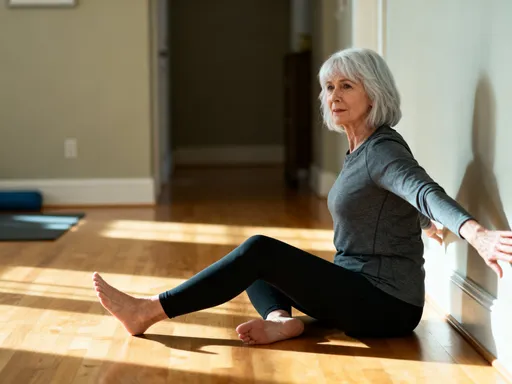
Mobility training is the first pillar. It involves gentle range-of-motion exercises that keep joints lubricated and flexible. Examples include shoulder rolls, ankle circles, and neck tilts—movements so simple they can be done while sitting at a desk or watching television. A slightly more structured exercise is the wall slide: standing with your back against a wall and slowly sliding your arms up and down in a 'goal post' position. This movement improves shoulder mobility and posture, counteracting the forward slump many develop from prolonged sitting. Mobility work doesn’t build strength, but it creates the foundation for it by ensuring joints can move freely and without pain.
The second pillar, low-impact strength work, focuses on rebuilding muscle mass and endurance. As we age, we naturally lose muscle—a process called sarcopenia—starting as early as our 30s. Strength training slows this loss and helps maintain metabolic health. The key is consistency, not intensity. Seated marches, where you sit in a sturdy chair and lift your knees alternately, engage the hip flexors and core without straining the back. Heel raises, done while holding onto a countertop, strengthen the calves and support balance. These exercises can be performed in sets of 10–15 repetitions, gradually increasing over time. Because they’re low-impact, they’re safe for most individuals, even those with joint concerns.
The third pillar, neuromuscular re-education, is about retraining the body to move efficiently. This includes balance drills like standing on one foot while brushing your teeth, or walking in a straight line heel-to-toe (also known as the tandem walk). These activities challenge the nervous system and improve coordination, reducing the risk of falls. Another example is the 'sit-to-stand' exercise: rising from a chair without using your hands. This movement integrates strength, balance, and timing, mimicking real-life actions like getting up from a sofa. Over time, these small challenges help the brain and body communicate more effectively, making everyday movements safer and more automatic.
How to Start: Building a 10-Minute Daily Routine
Starting a rehabilitation routine doesn’t require a major time commitment. In fact, beginning with just 10 minutes a day can yield noticeable benefits within weeks. The key is consistency. A simple morning sequence might begin with joint rotations: gently moving the wrists, elbows, shoulders, neck, hips, knees, and ankles in circular motions for 30 seconds each. This warms up the synovial fluid in the joints and prepares the body for movement. Next, seated stretches—such as reaching the arms overhead or leaning gently to each side—can improve spinal mobility and relieve stiffness from sleep.
Follow this with three core exercises: seated marches (2 sets of 15), wall slides (2 sets of 10), and heel raises (2 sets of 12). These target major muscle groups while remaining gentle on the joints. Finish with a breathing exercise: inhaling deeply through the nose for a count of four, holding for four, and exhaling slowly through the mouth for six. This calms the nervous system and sets a mindful tone for the day. The entire sequence takes about 10 minutes and can be done in pajamas, beside the bed, or even while listening to the morning news.
To build the habit, pair the routine with an existing behavior. For example, do the exercises immediately after brushing your teeth or while waiting for the coffee to brew. Habit stacking—linking a new behavior to an established one—increases the likelihood of adherence. Tracking progress can also be motivating. Instead of focusing on numbers, notice qualitative changes: Do you feel less stiff in the morning? Can you stand up more easily? Are stairs less daunting? These subtle shifts are signs that the body is responding. Over time, the routine can be expanded—adding a short walk, increasing repetitions, or introducing light resistance bands—but the foundation remains small, consistent effort.
Real-Life Benefits: What Changes You’ll Notice
The benefits of a daily rehabilitation practice extend far beyond physical improvements. Many women report better sleep, likely due to improved circulation and reduced muscle tension. Others notice sharper mental focus, possibly linked to increased blood flow to the brain and the meditative rhythm of repetitive movement. Pain levels often decrease, especially in the lower back, hips, and knees, as muscles become stronger and joints move more freely. These changes may seem small in isolation, but together, they transform daily life.
One of the most profound outcomes is increased confidence. When you can move without fear—when bending, lifting, or walking feels safe again—it changes how you engage with the world. Women who once avoided social outings due to fatigue or discomfort find themselves more willing to participate. Grandmothers regain the ability to play with their grandchildren on the floor. Professionals stand taller in meetings, no longer limited by back pain. These moments of regained independence are not just physical victories; they are emotional and psychological ones as well.
Over time, the routine becomes less of a chore and more of a self-respecting ritual. It’s no longer about 'fixing' something broken but about honoring the body’s need for care. This shift in perspective is powerful. It moves the focus from appearance to function, from fear of aging to empowerment in aging. The result is not just a longer life, but a more vibrant one—where energy, mobility, and joy are preserved well into the later years.
Common Roadblocks and How to Overcome Them
Despite the benefits, many women struggle to begin or maintain a rehab routine. The most common barriers are lack of time, low motivation, and fear of physical limitations. The solution is not to push harder but to simplify. If 10 minutes feels overwhelming, break it into two 5-minute sessions—one in the morning, one in the evening. If motivation is low, focus on just one exercise, like seated marches, and do it consistently. The goal is not perfection but persistence. Even two minutes of movement is better than none.
Another effective strategy is to use reminders. Set a daily alarm labeled 'Move with care' or place a sticky note on the bathroom mirror. Visual cues help reinforce new habits. It’s also helpful to reframe the mindset: instead of viewing rehab as a task or obligation, see it as an act of self-respect. This isn’t about achieving a certain look or meeting external standards—it’s about feeling capable, strong, and in tune with your body. When framed this way, the practice becomes less about discipline and more about self-kindness.
For those with existing health concerns, it’s important to start gently and consult a healthcare provider before beginning any new program. Many assume they must be 'in shape' to begin, but rehabilitation is designed for all fitness levels. Modifications are always possible: perform exercises seated instead of standing, reduce range of motion, or slow the pace. The goal is not to strain but to stimulate. Over time, as strength and confidence grow, the routine can naturally evolve. The key is to begin where you are, not where you think you should be.
Integrating Rehab Into a Lifelong Wellness Mindset
Anti-aging rehabilitation is not a short-term fix but a lifelong practice. When embraced as part of a broader wellness approach, it complements other healthy habits like balanced nutrition, proper hydration, and quality sleep. These elements work synergistically: good nutrition fuels muscle repair, hydration supports joint lubrication, and sleep allows the body to recover and regenerate. Together, they create a foundation for sustained vitality.
As confidence grows, the routine can be gradually expanded. Adding a resistance band to seated marches increases muscle engagement. Taking a 15-minute walk after meals supports circulation and digestion. Practicing balance drills near a counter builds stability. The progression should be slow and intuitive, guided by how the body feels, not by external pressure. This is not about pushing limits but about expanding capacity with care.
Ultimately, anti-aging rehab is about redefining what it means to grow older. It challenges the narrative that aging must mean decline. Instead, it offers a vision of aging as a time of strength, dignity, and continued growth. By investing in daily movement, women take an active role in shaping their health trajectory. They are not passive observers of time but active participants in their well-being. This quiet, consistent practice becomes a form of resistance—not against the years, but against the idea that aging must mean loss.
Before beginning any new exercise program, it is advisable to consult with a healthcare professional, especially for those with pre-existing conditions. This ensures safety and allows for personalized guidance. With professional input and a commitment to gentle, consistent effort, rehabilitation becomes more than a routine—it becomes a promise. A promise to move with purpose, to care for the body that carries us through life, and to age not with fear, but with grace, strength, and confidence.