Thunder Under the Rainbow: My Wild Walk Through Iguazu’s Heart
Have you ever stood so close to a waterfall that the air trembled? Iguazu Falls isn’t just water—it’s a living storm. Mist rises like ghosts, rainbows dance on spray, and the jungle hums with unseen life. This isn’t sightseeing; it’s immersion. I walked the catwalks, felt the roar in my chest, and found nature not as a view—but as a force. Located at the meeting point of Brazil, Argentina, and Paraguay, Iguazu Falls spans nearly two miles and comprises around 275 individual cascades, making it one of the most expansive and powerful waterfall systems on Earth. More than a destination, it is an experience that reshapes how we understand nature’s grandeur, rhythm, and resilience. For travelers seeking both awe and introspection, Iguazu offers a rare convergence of raw energy and quiet revelation.
Arrival at the Edge of Wonder
Reaching Iguazu National Park is part of the journey’s magic. Whether arriving from Foz do Iguaçu in Brazil or Puerto Iguazú in Argentina, the transition into the rainforest feels like stepping into another world. The air grows thick with humidity, rich with the scent of damp earth and blooming orchids. Bird calls echo from the canopy—sharp whistles, guttural croaks, and the occasional flash of emerald as a parrot darts between trees. As visitors pass through the park entrance, the distant rumble of falling water begins to build, a low-frequency pulse that grows stronger with every step forward. No photograph or video can prepare one for the sheer scale of what lies ahead.
The upper circuit trails on the Brazilian side provide the first complete panorama of the falls. From this vantage, Iguazu unfolds like a vast natural amphitheater, where water tumbles over basalt cliffs in a continuous 2.7-kilometer curtain. The boardwalks, carefully engineered to minimize environmental impact, wind through dense Atlantic Forest, offering frequent stopping points with safety rails and interpretive signage. These pathways are designed not to dominate the landscape but to guide the eye and steady the pace, allowing visitors to absorb the magnitude gradually. Toucans perch in fig trees, their bright beaks catching the sunlight, while coatis—small, raccoon-like mammals—scavenge near picnic areas, unbothered by human presence.
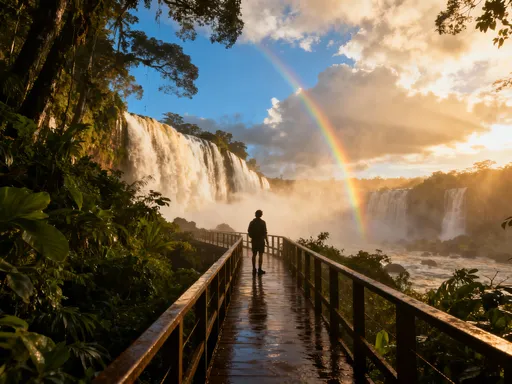
What distinguishes Iguazu from other waterfall destinations is the feeling of being enveloped by the spectacle rather than merely observing it. The mist rises constantly, cooling the skin and dampening hair within minutes. Rainbows form and dissolve with changes in sunlight, appearing and vanishing like fleeting promises. The infrastructure here reflects a thoughtful balance between accessibility and preservation. Viewing platforms are built to withstand years of exposure to moisture and foot traffic, yet they remain unobtrusive, blending into the greenery. This harmony between human design and natural force sets the tone for the entire experience—respectful, immersive, and unforgettable.
Walking Into the Deluge: The Devil’s Throat Experience
No part of Iguazu commands attention like the Devil’s Throat—Garganta del Diablo in Spanish, or Cataratas do Gargalo do Diabo in Portuguese. This U-shaped chasm, where the Iguazu River narrows and plunges with unimaginable force, is the heart of the falls. Reaching it involves a short ecological train ride through the jungle, followed by a final stretch of elevated walkway that extends boldly over the chasm. As visitors approach, the sound intensifies—a deep, continuous roar that vibrates through the soles of the feet and resonates in the chest cavity. It is not merely heard; it is felt, a physical presence that alters one’s sense of space and time.
At the viewing platform, the full power of the Devil’s Throat reveals itself. Fourteen major waterfalls drop simultaneously into a frothing abyss, sending up plumes of mist that rise higher than many city skyscrapers. The volume of water here is staggering—up to 1.3 million liters per second during peak flow, particularly in the rainy season between November and March. The resulting microclimate supports unique plant life, including mosses, ferns, and epiphytic orchids that cling to wet rock faces. Even in bright sunlight, the air remains cool and saturated, a testament to the constant evaporation and condensation cycle fueled by the falls.
Visitors are advised to wear rain jackets, but full dryness is impossible—and part of the experience. Within seconds of stepping onto the final platform, clothes become damp, hair clings to foreheads, and camera lenses fog over. Yet few retreat. There is something compelling about standing so close to such raw, untamed power. Park rangers monitor the area closely, ensuring safety without diminishing the sense of exposure to nature’s might. Signs warn against climbing railings or venturing off paths, but the real deterrent is the churning water below, a cauldron of whitewater and suction. This is not a place for recklessness; it is a place for reverence.
Exploring the Brazilian Side: Wider Views, Deeper Perspective
While both the Brazilian and Argentine sides of Iguazu offer extraordinary experiences, the Brazilian side excels in providing sweeping, panoramic views. The trails along the southern rim are shorter and less intensive than those on the Argentine side, making them accessible to a wider range of visitors, including families and older adults. What they lack in intimacy, they make up for in scope. From these elevated viewpoints, one can see the entire fan of the falls stretching across the horizon, a breathtaking display of water, rock, and greenery.
One of the most striking overlooks frames the confluence of the Iguazu and Paraná rivers, a calmer but equally significant moment in the river’s journey. Here, the turbulent energy of the falls gives way to a wide, slow-moving current that marks the beginning of the river’s path toward the Atlantic. Benches are thoughtfully placed, inviting visitors to sit, observe, and reflect. In these quiet moments, the mind begins to process what the eyes have seen—the scale, the sound, the sheer abundance of water in motion.
Wildlife appears more casually on this side, adding to the sense of immersion in a living ecosystem. Capuchin monkeys leap between branches, their curiosity evident as they watch passersby. Blue morpho butterflies—vivid flashes of iridescent blue—drift through shafts of sunlight, disappearing as quickly as they appear. The park’s design philosophy is evident: maximize visibility while minimizing human interference. Paths are paved but unobtrusive, signage is informative but not overwhelming, and waste bins are regularly emptied to protect local animals. The result is a space where nature remains dominant, and visitors are guests.
When Nature Performs: Rainbows, Wildlife, and Microclimates
Iguazu is never static. Its character shifts with the hour, the season, and the weather. One of its most enchanting phenomena is the formation of rainbows—natural spectacles that occur daily when sunlight refracts through the fine mist generated by the falls. These are not faint, occasional arcs but often full, vivid semicircles suspended in midair, appearing and disappearing as clouds pass. Morning light, especially between 9 a.m. and 11 a.m., produces the clearest conditions for rainbow viewing, making early arrival worthwhile for photographers and dreamers alike.
The constant spray from the falls creates a unique microclimate that supports a rich diversity of plant and animal life. Trees are draped in moss, their trunks softened by layers of green growth. Ferns grow in dense clusters, their fronds perpetually glistening. Bromeliads—tropical plants that collect water in their cup-like centers—thrive in this environment, often hosting tiny tree frogs or serving as nurseries for mosquito larvae, which in turn feed local birds and insects. This intricate web of life operates in plain sight, yet many visitors overlook it in their rush to the main viewpoints.
Birdwatching is a quiet joy at Iguazu. Herons stalk the riverbanks, kingfishers dive for small fish, and, with luck, one might spot the silhouette of a harpy eagle soaring above the canopy—a rare and majestic predator of the rainforest. Park rangers often lead short educational talks at designated stations, explaining how seasonal changes affect water volume and wildlife behavior. During the dry season, flow decreases significantly, altering the sound and appearance of the falls. In contrast, spring rains can double the water volume, turning the Devil’s Throat into a thunderous maelstrom. Each visit, therefore, offers a different version of Iguazu, shaped by natural rhythms beyond human control.
Beyond the Falls: Trails, Treetops, and Quiet Corners
Most visitors follow the well-trodden paths to the main viewpoints, but those who venture beyond are rewarded with a deeper understanding of Iguazu’s soul. A lesser-known trail loops through a section of secondary growth forest, where native vegetation is regenerating after past disturbances. Interpretive signs along this path explain the ecological importance of species like the lapacho tree, known for its golden trumpet-shaped flowers and traditional medicinal uses. This trail is quieter, shaded, and alive with the rustle of small mammals and the calls of unseen birds.
Another hidden gem is the network of canopy walkways, elevated above the floodline and offering a bird’s-eye view of the treetop layer. From this height, visitors can observe bromeliads in full bloom, parrots flying in pairs, and the intricate structure of the forest canopy. These walkways are particularly magical at dawn, when the park is nearly empty and the jungle awakens with the deep, resonant calls of howler monkeys. Agoutis, small rodent-like creatures, scurry through leaf litter, while butterflies begin their daily dance in sunlit clearings.
Even the visitor center contributes meaningfully to the experience. Interactive displays explain the hydrology of the Iguazu River, the geology of the basalt cliffs, and the conservation efforts that protect this UNESCO World Heritage Site. A short film introduces the indigenous Guarani people, who have lived in the region for centuries and regard the falls as a sacred place. This educational component ensures that visitors leave not only with photographs but with a deeper appreciation for the natural and cultural forces that sustain Iguazu.
Planning Your Visit: Timing, Access, and Smart Moves
Preparation enhances the Iguazu experience significantly. The park is accessible via Foz do Iguaçu International Airport, with regular flights from São Paulo, Rio de Janeiro, and Buenos Aires. Alternatively, land crossings from Argentina allow for multi-day itineraries that include both sides of the falls. Entry tickets should be purchased online in advance, especially during peak seasons like summer holidays and Carnival, to avoid long queues at the gate.
Timing your visit can make a notable difference. Mornings are ideal for smaller crowds, clearer skies, and optimal lighting for photography. By midday, the mist thickens, and the sun creates glare on wet surfaces. Late afternoons offer golden hour lighting, which enhances the colors of the rainbows, though visibility may be reduced by heavier spray. The park opens at 8 a.m. and closes at 6 p.m., so planning arrival early ensures ample time to explore without rushing.
Packing appropriately is essential. Quick-dry clothing, secure waterproof footwear with good traction, and a lightweight rain jacket are must-haves. The boardwalks can be slippery, and the constant mist means that staying dry is nearly impossible—but comfort is achievable. Waterproof bags or dry pouches are highly recommended for protecting phones, cameras, and other electronics. While some visitors opt for ponchos available at kiosks, bringing a reusable rain cover is more sustainable.
For those seeking a more thrilling perspective, boat rides operate seasonally from the Argentine side, taking passengers directly beneath the falls for a drenching, exhilarating experience. However, these excursions depend on water levels and weather conditions and may be suspended during periods of high flow. Guided tours, available in multiple languages, provide valuable context about the park’s ecology, history, and conservation, though independent exploration with a detailed map is also rewarding. Families may appreciate the park’s picnic areas, rest zones, and snack stands, which offer local refreshments like mate tea and tropical fruit juices.
Why Iguazu Stays With You: Nature as a Mirror
Iguazu does more than impress—it transforms. Standing before such overwhelming force, one cannot help but feel small, yet curiously connected. The roar of the water drowns out internal chatter, creating space for stillness and reflection. In a world dominated by screens, schedules, and constant stimulation, Iguazu insists on presence. It does not ask for worship or even understanding—only attention. And in return, it offers awe, clarity, and a profound sense of belonging to something greater.
This is not escape, but reconnection. The journey home carries more than souvenirs and photographs. It carries a quieter mind, a deeper breath, and the echo of falling water that lingers like a heartbeat. Iguazu reminds us that beauty and power are not opposites but companions, that nature operates on scales beyond human control, and that true wonder requires no embellishment. For women in their thirties to fifties—mothers, caregivers, professionals, dreamers—this kind of experience is not a luxury, but a necessity. It restores balance. It renews perspective. It whispers that even in the midst of life’s noise, there are places where the earth still speaks, loudly and without apology.
Iguazu Falls is not just a destination. It is a living testament to the enduring power of the natural world. It invites us not to conquer, but to witness. Not to capture, but to feel. And in that feeling, we remember who we are—not apart from nature, but within it. For those ready to step into the mist, to let the roar fill their chest, and to walk beneath a rainbow born of thunder, Iguazu awaits—not as a spectacle, but as a revelation.