You Won’t Believe These Komodo Viewpoints Exist
So you think you’ve seen stunning landscapes? Wait until you set eyes on Komodo, Indonesia. I’m talking about raw, otherworldly beauty—where emerald hills roll into turquoise waters and dragons roam like ancient guardians. From sunrise at Sano Nggoang to the cliffside magic of Bukit Cita, these viewpoints aren’t just scenic—they redefine what nature can do. Trust me, your travel feed needs this. This is not just another island escape; it’s a living, breathing masterpiece shaped by time, tectonics, and isolation. Komodo National Park, a UNESCO World Heritage site and one of the most biologically unique regions on Earth, offers more than postcard views—it delivers transformation through immersion in wild authenticity.
The Wild Heart of Komodo: Where Nature Defies Imagination
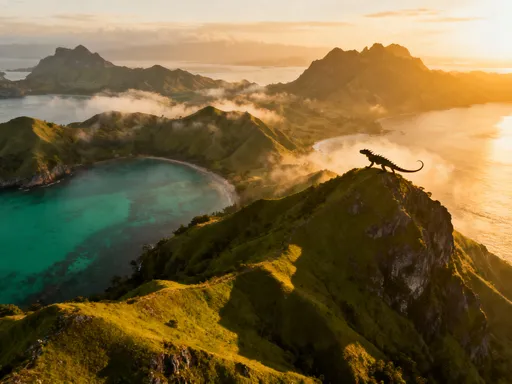
Komodo National Park, located in the heart of Indonesia’s Lesser Sunda Islands, spans over 1,800 square kilometers of land and sea, uniting volcanic terrain, savannah grasslands, and coral-rich waters into one extraordinary ecosystem. Established in 1980 to protect the endangered Komodo dragon—the world’s largest living lizard—the park has since become a sanctuary for far more than its namesake. Its dramatic topography, shaped by tectonic shifts and centuries of erosion, creates natural amphitheaters of hills and cliffs that rise abruptly from the sea, offering some of the most breathtaking vantage points in Southeast Asia. The island’s rugged silhouette against the horizon feels almost prehistoric, and in many ways, it is.
What makes Komodo so visually arresting is the contrast: golden savannahs burn under tropical sun, while deep blue waters lap at pink-sand beaches. The hills, sparse with drought-resistant vegetation, roll like waves frozen mid-motion, creating undulating panoramas that shift in color with the sun’s arc. From above, the landscape resembles a vast natural painting, where every viewpoint frames a different masterpiece. These elevations are not just scenic bonuses—they are essential to understanding the scale and drama of this protected realm. Because much of Komodo remains undeveloped and inaccessible by road, the only way to truly experience its grandeur is on foot, ascending trails that lead to sweeping overlooks.
The park’s status as a UNESCO World Heritage site since 1991 underscores its global significance, not only for its terrestrial wildlife but also for its marine biodiversity. Over 1,000 species of fish and 260 species of coral thrive in its waters, making underwater visibility just as compelling as aerial views. Yet it is from the heights—where land, sky, and sea converge—that visitors gain a full appreciation of Komodo’s wild heart. Each summit offers a silent invitation: to pause, observe, and witness nature in its most unfiltered form. This is not curated scenery; it is nature asserting itself in bold, uncompromising strokes.
Sano Nggoang: Chasing the First Light Over Dragon Land
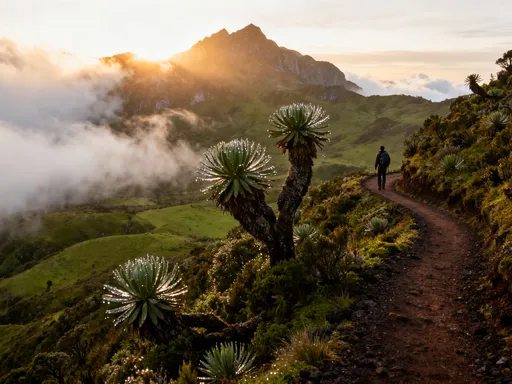
Rising 335 meters above sea level, Sano Nggoang stands as the highest point on Komodo Island, and for early risers willing to trek in the dark, it delivers one of the most transcendent sunrise experiences on the planet. The journey begins before dawn, guided by flashlight and the occasional call of night birds, as visitors follow a well-marked but steep trail through dry monsoon forest. The climb takes approximately 45 minutes to an hour, depending on fitness level, and requires a licensed ranger escort—a non-negotiable rule for safety and conservation. As the first hints of light bleed into the eastern sky, the world below begins to awaken, revealing a mosaic of islands scattered across the Flores Sea like emeralds in a silver tray.
At the summit, the 360-degree panorama is nothing short of staggering. To the north, Rinca Island emerges from the mist; to the south, the jagged peaks of Padar Island cut across the horizon. Below, Komodo’s winding coast glows in soft pastels, and the straits between islands shimmer with shifting currents. As the sun breaches the sea, golden light spills across the hills, transforming the dry grass into a sea of molten gold. This is the moment many travelers describe as spiritual—a silent, awe-filled realization of nature’s quiet power. Photographers line the viewing platform, but even without a camera, the memory imprints deeply.
Visiting Sano Nggoang requires preparation. The best time to arrive is 45 minutes before sunrise, meaning departure from Loh Liang harbor around 4:00 AM. Comfortable hiking shoes, a headlamp, water, and light snacks are essential. While the trail is not technically difficult, the incline and humidity can challenge unprepared hikers. In the dry season (May to October), conditions are optimal, with clear skies and minimal fog. During the wetter months, visibility may be reduced, but the dramatic cloud cover can add a mystical quality to the view. Regardless of season, the experience remains one of the park’s most unforgettable—proof that the greatest rewards often come to those willing to rise before the world does.
Bukit Cita: The Hidden Perch with Million-Dollar Views
Tucked just a short distance from the main entrance at Loh Liang, Bukit Cita remains one of Komodo’s best-kept secrets—a viewpoint that offers grandeur without the crowds. The trailhead begins near the ranger station, winding upward through acacia-dotted slopes and rocky outcrops. Unlike the more famous peaks, Bukit Cita sees fewer visitors, making it ideal for those seeking solitude and a more intimate connection with the landscape. The hike is moderate, taking about 30 to 40 minutes to reach the summit, and while it doesn’t climb as high as Sano Nggoang, its vantage point is no less impressive.
From the top, the view unfolds like a living diorama: the bay of Loh Liang stretches below, dotted with anchored boats and framed by forested hills. In the distance, small islets rise from the water, their shapes softened by haze and distance. The perspective captures the park’s operational heart—where rangers monitor dragon activity, researchers conduct studies, and boats embark on multi-day expeditions—yet from above, it all appears serene, almost dreamlike. The play of light in the late afternoon is particularly striking, as long shadows stretch across the terrain and the sea turns from turquoise to deep sapphire.
What sets Bukit Cita apart is its tranquility. While other viewpoints buzz with tour groups and photo sessions, this spot often belongs to just a handful of visitors at a time. It’s a place to sit, breathe, and absorb the silence—broken only by the rustle of dry leaves and the distant cry of a Brahminy kite circling overhead. Families with older children, solo travelers, and photographers seeking soft golden-hour lighting find it especially rewarding. There’s no infrastructure at the summit—just a few flat rocks to sit on and unobstructed views in every direction. For those who believe the best experiences are found off the beaten path, Bukit Cita delivers quietly but completely.
Padar Island’s Iconic Summit: A Classic for a Reason
No list of Komodo viewpoints would be complete without Padar Island, home to one of the most photographed landscapes in Indonesia. The climb to the island’s summit—approximately 120 meters above sea level—begins with a steep series of switchbacks carved into the hillside. Though the ascent takes only 20 to 30 minutes for most hikers, the incline is relentless, and the tropical heat can be intense. Visitors must be accompanied by a ranger, and access is regulated to protect the fragile ecosystem. Once at the top, however, all effort dissolves into wonder.
The panoramic view reveals a rare geological phenomenon: three distinct beaches radiating from a central cove like the petals of a flower. To the west, a pristine white-sand beach glows under the sun; to the north, a black volcanic sand beach contrasts sharply; and to the east, a blush-colored shore—tinged pink by crushed coral—completes the triad. The surrounding waters shift between shades of aquamarine and deep blue, depending on the sun’s angle. This fan-shaped coastline, best seen from above, is a masterpiece of natural design, shaped by millennia of wave action and tectonic movement.
Padar’s popularity is well-earned, but it also means the trail can be busy, especially between 8:00 and 10:00 AM, when most boat tours arrive. For a more peaceful experience, consider visiting later in the morning or during the shoulder seasons (April or November), when tourist numbers are lower. Weather plays a crucial role in visibility—on clear days, the islands stretch to the horizon; on overcast mornings, the peaks may vanish into low clouds. The dry season offers the most reliable conditions, with minimal rainfall and maximum clarity. Regardless of when you go, the summit of Padar Island remains a bucket-list destination—a place where nature’s artistry is on full display.
Melo Hill: Off the Beaten Path with Raw Authenticity
For travelers seeking an untouched experience, Melo Hill on Rinca Island presents a compelling alternative. Less frequented than Komodo’s main viewpoints, this trail offers a rugged, authentic journey through dry savannah and rocky ridgelines. The hike begins near the Rinca ranger station and follows a less-maintained path that requires close attention and a steady pace. Unlike the well-paved steps of Padar, Melo Hill’s trail is natural and uneven, winding through thorny scrub and open clearings where deer and wild boar occasionally graze. A ranger escort is mandatory, not only for safety but also to navigate the terrain and ensure visitors maintain a safe distance from Komodo dragons.
The climb takes about 45 minutes and rewards with a panoramic view that rivals even Sano Nggoang. From the summit, the Loh Buaya valley spreads below, a patchwork of grassland and forest where dragons are often spotted basking in the sun. The surrounding islands—Komodo, Rinca, and small unnamed islets—form a scattered archipelago across the sea. What makes Melo Hill special is the sense of discovery: there are no railings, no viewing platforms, just raw elevation and unfiltered nature. The air is quieter here, filled only with wind and the occasional birdcall, offering a meditative contrast to the busier trails.
This viewpoint is ideal for those who value solitude and a deeper connection with the environment. Because it’s less advertised and requires a longer boat ride to reach Rinca, Melo Hill remains relatively free of crowds. It’s also physically more demanding, which naturally filters out casual visitors. For experienced hikers and nature enthusiasts, the effort is worth every step. The lack of infrastructure means visitors must carry out all trash and avoid straying from the path, but these small sacrifices preserve the site’s integrity. In a world where many destinations feel overexposed, Melo Hill stands as a reminder that true beauty often lies just beyond the well-trodden trail.
Snorkeling Vantage Points: Seeing Komodo from Beneath the Surface
While the island’s peaks offer aerial splendor, Komodo’s underwater vistas are equally transformative. Some of the park’s most stunning viewpoints are not on land at all, but beneath the waves. Sites like Pink Beach, Batu Bolong, and Castle Rock provide vertical perspectives into thriving marine ecosystems, where coral gardens explode in color and marine life moves in hypnotic patterns. Snorkeling here is not just recreation—it’s a window into one of the planet’s most biodiverse underwater realms.
Pink Beach, named for its coral-pink sand, offers calm, shallow waters ideal for beginners. Floating above the reef, visitors see a kaleidoscope of hard and soft corals in hues of purple, orange, and green. Schools of anthias, damselfish, and clownfish dart through the branches, while parrotfish graze on algae. With clear visibility often exceeding 20 meters, the sense of depth and scale is profound. Batu Bolong, a submerged reef near a small islet, is more dynamic—stronger currents attract larger pelagics, including reef sharks, barracuda, and even manta rays during migration season. Here, snorkelers cling to ropes while observing the underwater drama unfold below.
These aquatic viewpoints require preparation. A well-fitting mask, snorkel, and fins are essential, and a lightweight rash guard helps protect against sun and coral scrapes. Because currents can be unpredictable, snorkeling should always be done with a guide and in designated areas. Eco-friendly sunscreen is mandatory—chemical sunscreens harm coral and are banned in the park. Visitors are reminded to observe marine life without touching, feeding, or chasing animals. By following these guidelines, travelers help preserve the very beauty they’ve come to witness. In Komodo, the line between observer and steward is beautifully blurred.
Planning Your Viewpoint Journey: Logistics That Make or Break the Trip
Reaching Komodo’s most stunning viewpoints requires thoughtful planning, but the effort is well worth the reward. The journey typically begins with a flight to Labuan Bajo, a coastal town on the western tip of Flores Island. From there, most visitors join multi-day boat tours—ranging from basic liveaboards to luxury yachts—that navigate the park’s islands and anchor near key trailheads. These tours, usually lasting 3 to 5 days, offer the most comprehensive way to experience Komodo’s diversity, combining hiking, snorkeling, and cultural stops in nearby villages.
Permits are required for all visitors and are typically arranged through tour operators. The Komodo National Park entrance fee includes conservation and ranger services, and fees are higher during peak season (July to September). Travelers should book tours in advance, especially during dry months, as availability fills quickly. Physical preparation is also key: while trails vary in difficulty, all involve hiking in hot, humid conditions with limited shade. Good footwear, breathable clothing, sun protection, and ample water are non-negotiable. Motion sickness medication may be helpful for those sensitive to boat travel.
The best time to visit is from May to October, when skies are clear, seas are calm, and wildlife is most active. During these months, visibility for both hiking and snorkeling is optimal. November to April brings heavier rains and stronger currents, making some sites inaccessible. Regardless of season, conservation remains paramount. Visitors must stay on marked trails, avoid feeding or approaching Komodo dragons, and carry out all waste. Drones require special permits and are restricted in sensitive zones. Above all, the goal is to leave no trace—to ensure that these extraordinary viewpoints remain pristine for future generations.
Komodo is not just a destination; it is a privilege. Each viewpoint, whether reached by sunrise trek or underwater glide, offers a moment of awe—a reminder that Earth still holds wild, untamed places of breathtaking beauty. For the 30- to 55-year-old traveler, often balancing family, career, and personal renewal, Komodo represents more than adventure. It offers clarity, perspective, and a deep reconnection with nature’s timeless rhythm. These views don’t just fill a camera roll—they fill the soul. And in a world that moves too fast, that kind of transformation is priceless.